Showing posts with label book clubs. Show all posts

Monday, June 16, 2014

A book club, a recipe, and Skype (or Facetime)


Now that my schedule is easing up, I've had time to think about the ways I connect with book clubs. Each time I've met with book club members, it was over food. So that begs the question - if I meet a book club via Skype or Facetime, how can we share food?
So here on my blog, I decided to share a recipe for my favorite German dish, KaeseSpaetzle.
It's homemade noodles cooked with onions and melted cheese, so in a way it's Germany's mac-and-cheese. But much better, trust me. My mother and grandmother made variations of this without measuring a thing, just throwing handfuls of ingredients into a bowl and mixing until it 'feels right.' I haven't got that touch - bummer. 

KaeseSpaetzle Recipe
Ingredients:
3 eggs     1 3/4 c. flour     1/2 t. salt       1T. vegetable oil      1/2 c. water

1/4 c. butter     2 onions, halved and sliced     3 c. shredded Swiss or Emmentaler cheese

Directions:
In a large bowl, combine eggs, flour, salt, oil, and water. Mix until smooth, then let rest for about 10 minutes. In the meantime, melt the butter in a saute pan, and saute the onion until golden brown. Set aside.
Preheat oven to 300 F. Lightly grease a 9" casserole dish.
Bring a large pot of slightly salted water to a boil. Place 1/3 of the dough into a spaetzle maker or a collander with large holes. Let the dough drop into the boiling water, urging it out by pressing with a spoon if needed. Boil until the noodles rise to the top, the transfer them to the casserole dish with a slotted spoon. Cover them with 1 c. of the cheese. Repeat the process with remaining dough and cheese, creating two more layers of spaetzle and cheese. Spoon the sauteed onions over the top.
Bake at 300 for about 15 minutes, or until cheese is completely melted. Or instead of baking, you can do what my mother and grandmother did - saute the whole shebang in another 1/4 c. butter, turning frequently until the cheese is melted. Before serving, sprinkle with 1 or 2 T of white vinegar and 1T chopped parsley if desired.

Now if your book club reads Risking Exposure, invite me via Skype or Facetime and we can still share a meal!


Sunday, May 25, 2014

Help our libraries!

This past Wednesday, I was The Author at the Susquehanna County Library Association's annual Author Luncheon. What an honor to speak in front of 60 attendees! The event is a fundraiser for the Library, and Susan Stone, Head Librarian, told me that library fundraising is becoming more commonplace than ever before. Even within the luncheon there was fundraising - a sale of 50/50 tickets, and silent auction for some lovely prints, flowering bulbs, jewelry, and a favorite among the attendees, a 'books and bubbly' basket. I am pleased to think that my presentation may have helped the library raise a few dollars.

What a shame it has come to that. Between deep state funding cuts (thank you, Tom Corbett), consumer demand and need for costly technology, and increased operating expenses for maintenance and heat, our public libraries have trouble balancing their budgets. And yet on a fundamental level, our very existence as a free nation depends on free exchange of ideas. Those ideas are cataloged and stored in our public libraries, and are accessible without charge to anyone who asks. It seems our Public Libraries joins our Public Schools as institutions present in virtually every community in America, providing free access to information vital to our continuity as a prosperous nation and doing so with ever-dwindling funds.

On a recent History Channel show, I learned that Ben Franklin 'invented' and established the world's first free Public Library. One commentator expressed a belief that the free Public Library was actually Franklin's greatest contribution to mankind. Long may our libraries remain free and public.

Sunday, May 18, 2014

How we confront our fears

The other day, one of those black, hairy spiders, the ones that are over an inch long and look like a child of Shelob from Lord of the Rings, crawled past my co-worker's feet. She screamed and jumped back, and the now-frightened spider tried to hide in a corner. Startled, I hollered too, then grabbed a tissue box and chased the bugger until he was history. When I was done flushing his remnants down the toilet, I scrubbed my hands and shuddered. But my poor co-worker had barely moved from her frozen terror.

I'm not fond of spiders, and ones longer than my thumb and hairier than a chihuahua give me the creeps. But the incident made me think - why do we each react so differently to what we're afraid of? Some of us are temporarily paralyzed by our fear. Unable to react to or gain control over the object of our fear, it controls us and leaves us vulnerable. Thieves who use the victim's own fear as a weapon against them take advantage of this very human reaction.


Then there are people who fight against the object of their fear. This may be a positive fight, as I hope mine was, ridding my workplace of a totally gross critter. But others may exhibit their fight against the object of their fear in a negative, harmful way. In a recent op-ed in the NY Times, Nicholas Kristof says that Boko Haram, the terrorist group responsible for kidnapping over 200 Nigerian schoolgirls, is reacting to their own fears.

He says that they are afraid of the societal changes bound to take place when girls and women are educated. The result of education for girls is a society in which women are more able to provide for themselves and their families. This means a more robust economy which in turn strengthens the tax base. Educated women are less likely to be dependent on a male provider, and may not be willing to remain in a more traditional subservient role.

So maybe that's why Boko Haram is lashing out at the Nigerian schoolgirls. They are afraid that intelligent, educated women will not put up with their bullying and will not go along with their propaganda.

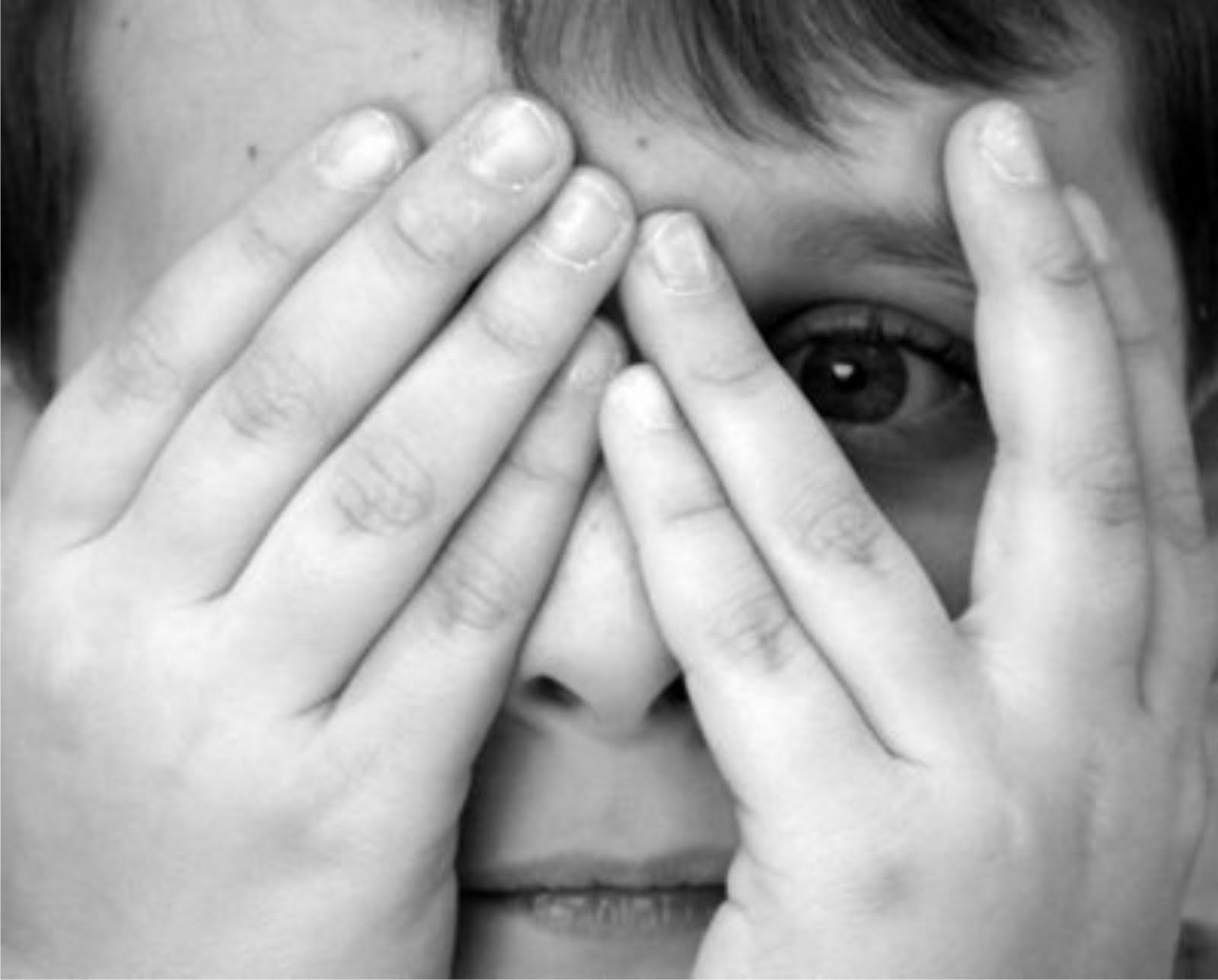
Image from Half the Sky by Nicholas Kristof and Sheryl WuDunn 


Sunday, May 4, 2014

The most frequent questions, Pt. 3

Will there be a sequel to Risking Exposure? What are you writing now?

When I finished writing Risking Exposure, I was tired. I had spent several years reading everything I could get my hands on about the Nazi era, watching documentaries, etc. Pouring through so much twisting of the truth and outright evil was exhausting, physically, emotionally, and spiritually. My conclusion was that I never wanted to read another thing about Nazi Germany ever again.


But within 6 or 8 weeks, something happened. I'd be driving down the road and a character I'd relegated to the 'deleted scenes' folder would pop into my mind. Something a neighbor said would remind me of a dialogue exchange I'd cut. Pretty soon those characters and exchanges were forming new scenes and it became clear - the characters in my deleted scenes folder wanted their story told too. It's my job to give them their opportunity.

What is taking shape is a sequel, although told through another character's POV. No, I don't have a title or a time frame for release. That's actually not even on my radar yet.
I've been researching events which took place in Munich during July 1938 until very early 1939, about 6 months after Risking Exposure ends. I have what I believe to be a framework on which to hang my story. In my over-ambitious mind, I have set a goal of getting a first draft written by the end of 2014. (I may kick myself for making that public.)


Sunday, April 27, 2014

The most frequent questions, Pt. 2

Why would a nice person like you write about Nazi Germany?

  I've written (and published) fiction and non-fiction short pieces for all ages, preschool through adult. Risking Exposure is the only one set in Nazi Germany. The others aren't even remotely similar in time or place or even in tone - Chicken Soup for the Soul for audiences seeking inspiration, Highlights High Five for preschoolers, Advance for Physical Therapists for PTs and PTAs, Discovery Years and Thriving Family for parents, Hopscotch for kids, plus a few currently on Wattpad. I think across genres, I read across genres, so I write across genres too.

I love stories, real or fictional, in which an unlikely hero must pull himself up by his bootstraps and become more than he was, in which an ordinary person is forced to rise above her circumstances in order to stand up for what is right.
That means the hero would have to be in a time and place in which doing what's right comes at great personal risk. Nazi Germany was just such a place.

All four of my grandparents emigrated to the US from Germany in the 1920s. One grandmother lived in our apartment building when I was a kid, and the other one moved in with us when I was a teen. So we got a good dose of the language, food, music, and culture of the homeland they loved. When I learned of the Nazi years in school, I asked the same questions many have asked - How could that happen? How could the country which produced my own family, plus geniuses like Bach and Goethe allow such horrors to occur right under their noses?

The answers are complex of course, spanning decades of Germany history and the culture of everyday life in a police state and dictatorship. But in exploring the answers, I found some simple themes which resonated with me -
it was a time and place of blind allegiance to an ideal;
in which some people held more value than others;

in which people were brainwashed by a flood of government-controlled information;
in which the voices of those who spoke against the regime were silenced through threats, violence, or detention.

It was and still is a perfect storm to use as a backdrop for a hero story. That's probably why so many of us writers choose to set our stories there.


Sunday, April 20, 2014

The most frequent questions

I've had the good fortune to take part in a number of book signings, and I've presented my historical research in front of more than 100 people now. Audiences have varied in age and size, but I find I'm being asked three questions at almost every event. I'll try to answer them here in installments.

1. Did you always want to be a writer/ write a book?
As a young girl, I did want to write stories. Even then, I was fascinated by the way stories and characters stayed with me, and I wanted to be able to have my ideas impact other people that way. Experiencing a story for me has always been close to experiencing it first-hand - I feel emotions, learn lessons, cheer for heroic actions, and weep over sad endings. Through reading historical fiction and stories set in distant lands, I've come to understand that people through history and around the world are pretty much the same.
So yes, I did want to write when I was a kid. But I also wanted to be a ballerina and to travel the world in a hot air balloon. Turns out I'm a klutz and not fond of heights, so those things didn't happen. And even though I loved creative writing class in high school, I never pursued it in my college or career  plans. I went to college to learn a skill to get a job, not to pursue an interest which would I thought would never earn me a living.

Once my own kids were grown and I had time for personal interests, I found that I still liked to write. In fact, the more I did it, the more I liked it. No, I loved it. Now, a perfect day for me involves some coffee, a good dose of sunshine, and a couple hours of writing.


Next:
Why would a nice person like you write about Nazi Germany?