Berlin resident Irmela Schramm is a septugenerian on a mission. Armed with a scraper, nail polish remover, and a can of red spray paint in her 'Anti-Nazi' bag, Schramm has turned hate-filled propaganda into words of love and support for more than 30 years.
It all started for her one morning decades ago. A poster supporting convicted Nazi war criminal Rudolph Hess was plastered to a wall at her neighborhood bus stop. When it was still there on her return trip that evening, she was moved to act. She scraped it off with her house keys. She reports feeling fantastic afterward, knowing that she removed the 'mind pollution.'
Since then she has single-handedly removed over 130,000 expressions of hate. She uses spray paint to turn swastikas into hearts. She changes the wording of posters and graffiti to include expressions of support and kindness. Her efforts has met with mixed support. She has been hugged by strangers and received threats from neo-Nazi groups. Police have at times been bemused and have at other times threatened charges for defacement of property. Some community members have decried her activities as destruction of free speech. Schramm doesn't see it that way. She told CNN,"Freedom of speech has limits. It ends where hatred and contempt for humanity begins."
Twenty-year-old Jonathan Janzen was on his way to work on a Tuesday in July. As he drove 70 mph along a stretch of Interstate 20, he was momentarily distracted. He swerved, overcorrected, and lost control.
Then the amazing happened. Over a dozen strangers stopped their cars and raced to help Janzen out of the wreck. Working together, they flipped his car over and freed Janzen. Check out the slide show and the video of their cooperative effort.
Janzen's injuries were minor. “I was not expecting to see that many people standing there…then people [were] giving me hugs…” he said. “Thank you so much every single one of you, just thank you for your concern.”
Sometimes I wonder how I'd react in a threatening situation. I like to think I'd act for the good, that I would instantly know what to do and how to do it. But seriously, when faced with a fight-or-flight moment, would I try to change the outcome? Would I even recognize the opportunity to try?
A day or so after the latest terror attack, this time in Nice France during the Bastille Day celebration, an amazing story has emerged. It seems that two quick-thinking bystanders attempted to stop the terrorist and his rampaging truck. One rode his motorcycle alongside the truck and tried to break into the truck's cab. The second actually did get in the truck's cab and wrestled with the armed driver. We may never know the extent these acts changed the outcome as neither was successful in stopping the madness alone. Perhaps their efforts slowed its attack. God knows.
These courageous individuals are as yet unnamed by the press, but they are true heroes in every definition of the word. I hope the media shares their names and their stories. We need reminders of how to behave well in the face of evil if we're ever going to learn how to subdue it.
The American public was polled. Over half of us said we didn't need more immigrants, not with all the problems we already have here. Homelessness, joblessness, uncertain economy, rising taxes and costs of medical care. We especially didn't want those immigrants. Why they'd steal jobs from our own people, add a burden to the already struggling economy. We'd have to educate their kids with our kids, and if they lived near us, our kids might play together. They didn't speak our language or share our religion. We were sorry to hear about the craziness and brutality of their homeland, but their need to get away didn't mean our way of life had to be disrupted. After all, they weren't like us. Lord knows, we couldn't help everyone. So we Americans decided to help no one.
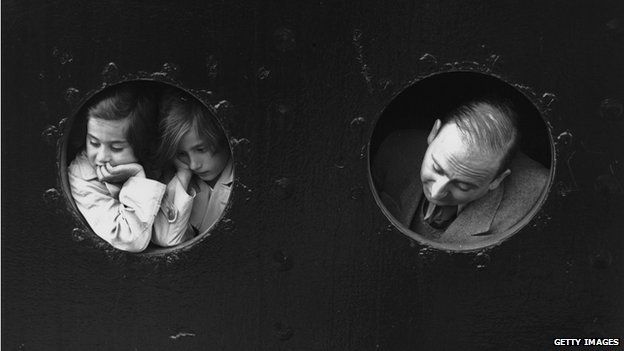
That was in 1939. The people in question were mostly Jews and political exiles fleeing Nazi Germany. Despite the astronomical rise in Germans and Austrians seeking asylum in America in the aftermath of Kristallnacht, we did not increase the number of Visas granted. We turned a blind eye during what is probably the most appalling reign of inhumanity in the 20th century, going so far as to physically turn away a shipload of mostly Jewish emigres. They were returned to Germany. Hundreds of them later died in concentration camps.
Of course, hindsight is 20-20. It's easy for us to sit here 75 years later and render judgement. We weren't there. We didn't share the struggles of Americans then. We didn't feel their fear at the potential danger of having Nazi spies mixed into the group. We didn't have these foreigners coming to our neighborhood with nothing but the clothes on their backs, competing with our people for jobs and food and housing.
But the parallel is unmistakable. Here we are in 2015, and again, people are fleeing oppression and violence. They're boarding inflatable boats and crossing a continent on foot to have a chance at a future. And again American polls reveal our attitude. We say, "I'm sorry to hear about your problems, but you can't come here. Some unsavory characters might sneak in."
How dare we call ourselves a Christian nation when we take a position so clearly lacking compassion and basic kindness. Completely un-Christian.
I'm proud of the stand taken by President Obama and Pennsylvania Governor Tom Wolf. They are sticking by the moral compass outlined for us by our forefathers. They're showing that we Americans have learned something in the last 75 years. Certainly we've learned that an Us vs Them mentality is outdated, and it's safe to say that Americans agree, we function as part of a global community. We all share the same air, the same sun, and yes, the same God, whatever we may call him. We get that. If only the majority of Americans were ready to put aside their fearful knee-jerk reactions and act on those beliefs.
In this generation, at this time and for all time, we Americans need to be firm in our commitment to be a beacon of the hope of freedom for people around the world, even when it makes us uncomfortable. If we aren't that beacon, who is?
An even bigger statement of who we are as Americans is this: if we turn our back on emigres out of fear, then the terrorists have won.
When Katie and I visited Munich, we toured a number of beautiful churches with soaring architectural details that made grand, impressive statements - tile and copper roofs, bell towers, leaded glass, and uniquely shaped design.
So when we came across the Burgersaal Church with its relatively plain exterior, we followed the stream of tourists and entered, expecting a relatively plain interior to match. We couldn't have been more wrong. The ceiling frescoes were stunning.
Just as surprising was a display in the church detailing the life and ministry of a person I'd never heard of, Father Rupert Mayer. He was a Jesuit priest who served the Burgersaal Church between the two World Wars. His dedication to the poor and estranged of Munich earned him the nickname "The Apostle of Munich." Were he a man of lesser convictions during those times, his legacy may have ended there - a gentle priest who worked tirelessly to feed and clothe the poor.
But Father Mayer was a man of strong convictions, strong faith in his Catholic beliefs, and an insistence on the rights and dignity of each individual as a child of God. The Nazi regime with its oppression of free speech, its targeted pogroms, and its intolerance for faith-based viewpoints was unbearable for Father Mayer. He preached against the Nazis from the pulpit, in individual meetings with parishioners, and when he led small study groups.
Warned several times by the Gestapo and twice arrested for his outspoken behavior, Father Mayer might have ended up as other Christians did during the Nazi years - a martyr for his faith. But the Nazis saw the strong support Father Mayer had in mostly Catholic Munich, his leagues of dedicated parishioners and how word of his work had spread through Bavaria. They feared that killing him would only strengthen his cause. Instead, they banished him to an Abbey where he was basically a silenced prisoner for the duration of the war.
I never heard of Father Mayer before I stepped into the Burgersaal that day. Since then, I've come across his name dozens of times during the research for my two historical fiction novels set in Nazi-era Munich. Since he was so integral to the people of Munich during that time period, I'm considering including his character in my current Work In Progress.
Father Mayer was beatified in 1987 and now has the title of Blessed. His story has been made into a 2014 film starring Stacy Keach and Darryl Hannah. I hope to find it soon on Netflix or at a Film Festival near me.
No doubt you've heard of Unbroken, the true story of an amazing man named Louis Zamperini. Based on the novel by Laura Hillenbrand, it was turned into a screenplay by the Coen brothers. Angelina Jolie directed and produced the film version, due for release this week.
It's safe to say that your average American never heard of Louis Zamperini before Laura Hillenbrand's novel, and now the History Channel has shared a list of eight things you may not know about him. Nearly as incredible as Louis' never-say-die spirit is Laura's own, as seen in this interview for the Today Show. Because of her own severe chronic fatigue syndrome and the limitations in activity it brings, she reports living vicariously through the vitality of her characters.
Which do you find more inspiring - Louis' will to stay alive despite enormous odds which accumulated one atop another, or Laura's will to get out of bed each day and use what little strength she had to chip at the huge undertaking of researching, organizing, and writing another bestseller?
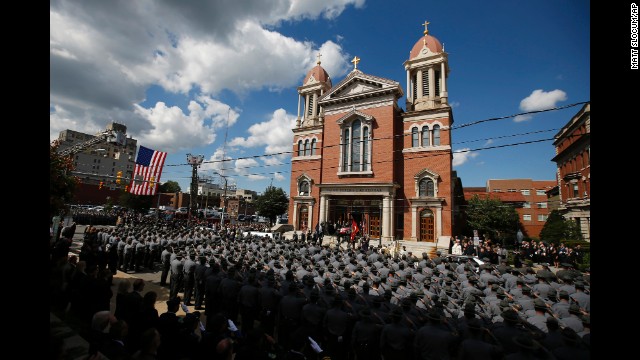
Our rural, ordinarily quiet region of Pennsylvania suffered the loss of a state trooper and the injury of a second trooper in an ambush at their barracks. As I write this, the gunman with a grudge against law enforcement is still on the loose, reportedly on foot through the woods and back roads of the Pocono Mountains. With troopers closing in on all sides, I pray this will end soon and with no further harm to anyone.
On Thursday, the day of the trooper's funeral, hundreds of troopers from around the country attended. To say security was tight is an understatement. So when I heard a low-flying helicopter overhead while I was at work, it barely registered. I assumed it was in connection with the funeral. Then I heard another helicopter. And another. The sound of blades became almost constant for about 20 minutes, and yet we were a full 12 miles away from the site of the mass and the burial. My thoughts switched. I began to wonder if the helicopters were searching the woods near my workplace for this madman.
Now I'm a fairly clear-headed person, not prone to panic or worst-case scenarios so I checked out news sources. The helicopters were indeed part of the funeral and the air search remained focused on an area about 30 miles away from me. But it made me wonder - if I had to live with a threat like that, how would I react? What would I do?
Which brings me to the point. In my safe, ordinary life, my behavior may be rational and predictable. If I were confronted with danger, I'd like to think I'd be moral. But I wonder. Would I freeze or act? Would I stay and fight or run? What if that danger surrounded me for days, for weeks or years? Would I hunker down in survival mode, or would I act to fight the danger which was disrupting my life and that of others?
That's where stories come in. Tales of people who behave honorably in horrific times and places continue to amaze me. Just this week I watched The Scarlet and the Black with Gregory Peck and Christopher Plummer. It's the true story of an Irish priest who worked at the Vatican during the Nazi occupation of Rome. He behaved honorably and according to his own morals in the face of Nazi aggression and against the orders of his Pope.
His tale gives me hope that, in the face of such evil, I would behave honorably too.
Your average adult probably doesn't see their own life interesting enough to capture in a memoir. But on occasion, I've overheard folks say, "If only I wrote down the (crazy, terrible, unexpected, hilarious) things that happened to me, I'd have a best-seller." At that moment at least, their experiences were unusual enough to merit recording and sharing.
Well, the Writers Group at the Dietrich Theater had a special guest this week, Ronald Wendling, a retired academic turned writer from the Philadelphia area. He graciously shared the first 10 pages of his March '15 release Unsuitable Treasure: An Ex-Jesuit Makes Peace with the Past. He spoke about his experiences in taking the book from idea to its final form, a journey several decades long. The title says it all - this book tells his unusual tale of joining the Jesuits and then moving away from them and into secular life. Certainly not your everyday experience, uncommon enough to be appropriately captured in a memoir.
I've just begun reading I Am Malala: The Girl Who Stood Up for Education and Was Shot by the Taliban. This memoir also tells a remarkable story, this time one of courage as this young girl acted on her personal beliefs and her right to an education. In the prologue, Malala says she has shared her story and continues to speak out because not to do so would mean triumph for the Taliban. So exceptional is her life that she has her memoir finished before she's out of her teens. God willing, this brave, articulate girl has many years ahead of her filled with extraordinary accomplishments suitable for another memoir or two.
 Berlin resident Irmela Schramm is a septugenerian on a mission. Armed with a scraper, nail polish remover, and a can of red spray paint in her 'Anti-Nazi' bag, Schramm has turned hate-filled propaganda into words of love and support for more than 30 years.