Sunday, August 12, 2012
What I learned during my ten thousand hours of practice, Pt. 3
Even though I read how-tos and took a couple courses on how to write a novel, I still floundered. A lot.
More of what I realized once I got going:
11. The novel writing course(s) provided general guidance, but no one held my hand to help me navigate this uncharted territory.
12. Revising a finished novel when my characters needed work was REALLY hard.
13. Writing historical fiction took a lot of research, before and during the writing process. As I revise, the research is ongoing. Good thing I'm still interested in that era.
14. Writing fantasy required me to create an entire world complete with rules of operation. The process was more complex than I thought it would be.
15. Writing multiple story lines which converge took far more planning than writing a single story line with a single protagonist.
16. Writing a single story line with a single protagonist was hard enough.
17. Writing novel-length fiction was nothing like writing articles or like writing non-fiction. And most of the rules my English teachers taught didn’t apply, especially when writing dialogue.
18. I had trouble staying focused on the story. I should have identified, in words out the outset, my story question and my pitch.
19. I didn’t know how to write fiction. My ‘deleted scenes’ and ‘early versions’ files are far bigger than the finished novel. And the novel still needs work.
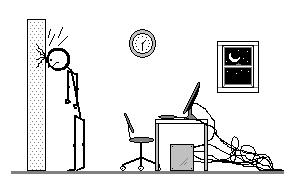
But I'm learning as I move forward, and believe it or not, I still enjoy the process and the challenge. I've gotten to a point where I can acknowledge what I did right, so that's up for tomorrow.
Saturday, August 11, 2012
What I learned during my ten thousand hours of practice, Pt. 2
So there I was, with some basic ideas, characters, and a visual display of my outline. I'd just start writing and the story would gel, right? Like the premise of driving at night - you can only see as far as your headlights allow, but as you move forward, it's always just enough.
Right? Wrong. Reality check.
What I realized once I got going:
1. The short articles I’d written had all been non-fiction. I’d never created a character before.
2. The characters I created were cardboard.
3. I’d never written a plot before.
4. The plot I wrote dragged.
5. I had no idea where to really begin my story and wrote about 10 different opening scenes. Most occurred earlier in the story than the previously attempted opening.
6. Writing a scene from a single sentence on an index card may have worked if the characters had been fleshed out. Mine hadn’t been, and they didn’t get flesh until I started writing about them. Then they got mouthy and demanded changes to the plot I’d planned for them.
7. Writing the plot on index cards might have worked as well, but again, those darn characters took over the action and I had to do their bidding. I took down the index cards and their long paper framework and burned them.
8. I tried plan B, to write the story ‘organically’, just let it grow from the seed of the story setting and problem.
9. Writing organically takes me a really long time, because it’s mostly false starts and wrong turns.
10. It’s hard for me to discipline my mind and keep it on track when I write organically. I need the structure of an outline, and my outline was crap.
Tomorrow - more of what I realized once I got going.
Friday, August 10, 2012
What I learned during my ten thousand hours of practice, Pt. 1
Malcolm Gladwell famously said that the key to success in any task is logging ten thousand hours of practice. His belief is that perseverance pays off, and I see the logic in that. It jives with the tongue-in-cheek answer to the NY tourist question, "How do I get to Carnegie Hall?" "Practice, practice, practice."
There's an acronym for this concept in the writing world: BIC, butt-in-chair. So as I began to write a novel, I knew I'd need to put in some serious time before I'd have a story worth reading.
I've learned much during these hours in the chair, and over the next few days, I'll share some of the insights I've gained.
As with any new project, I started with a baseline of ideas, assumptions, and skills.
What I thought when I started my novel:
1. I had a good idea for a setting and a problem.
2. I had a couple basic characters and spent a little time thinking about them.
3. That was enough to get me started; I’d work out the details as I went.
4. I wrote an idea for each scene on an index card and stuck them in sequence on a long roll of paper. All I had to do was take down a card, write that scene, and move on to the next.
5. Writing this novel would be like writing the short articles I’d written; it would just take me longer.
6. I’d start at the beginning of the story and write straight through until the ending.
7. I’d write a historical fantasy with multiple story lines and multiple protagonists converging into a climactic whole.
8. I enrolled in a novel-writing course when I started, so that would help me work through the bumps.
9. I knew how to write fiction because I liked to read fiction.
Tomorrow: What I realized once I got going.
Monday, July 30, 2012
Lessons and stone walls
As my ideas for another book start to gel, I'm applying the lessons I learned from writing my first book. These lessons were learned the hard way - the best way for me - through mistakes that cost time and effort.
1. First and foremost, I need to spend more time fleshing out my characters before I start writing. Most of the rewriting and editing I've done is because my incomplete character profiles led to confusing character actions or dialogue.
2. I need a more thorough outline, one that integrates the plot and the characters more fully. I developed what I thought was an outline but in actuality, it consisted only of plot points. Once I put characters into those situations, they didn't act as I planned and I had to tear up the whole outline (or in my case, tear down, since I had the outline taped to the wall) and start over. And again. And again.
3. I need to discipline the temptation to get side-tracked from the main point of the story. I now keep the Story Question and the Story Pitch taped over my desk as reminders of 'what my story is about.'
4. I need to do lots of research before I start. This is something I actually did right (!) with Risking Exposure. I read, watched documentaries, traveled to Munich to walk where Sophie would have walked and to study 1930's maps in the city archives, all before I started the real work of writing the story. My research has continued of course, as I needed details to be added to my ever-changing story.
In that vein, I've started some basic research for the story percolating in my head (see my post about Pinterest.) It involves stone walls and the bad news is my knowledge about them could fill a thimble. The good news is the Brooklyn PA Historical Society hosted a lecture on this region's stone walls by Ken Ely, a local enthusiast who teaches about and restores old walls as an avocation. He used dozens of slides to share his passion for these beautiful structures, describing their original purpose (to define property boundaries and keep livestock in), their construction and common features, as well as their restoration and preservation as part of our local heritage.
I learned that beneath the simple beauty of the stone wall that separates our property from the mountain behind lies a complex balance achieved through someone's investment of time, effort, and a vision of the completed task.
Which is also what I need to invest in my stories.
Saturday, July 21, 2012
Some irons in the fire
I've read that success in any venture comes only after about 1,000 hours of practice (Malcolm Gladwell, I think.)Given the part-time nature of my writing efforts, I've done well with a dozen or so published articles and stories but I'm still bummed when my inbox dings with the inevitable rejection letters. I guess that's the trade-off: keep my stories on my computer where they'll be cozy and safe but forever unread, or risk sending them into the big wide world and hope they'll find a home and a readership.
I soften the blow of (repeated) rejection by having a number of projects at once, multiple irons in the fire. I currently have a couple short stories, a magazine article or two, a picture book, and a novel, all in various stages of development and submission. I even have begun character sketches and an outline for another novel, including some Pinterest photos.
That oughta keep me busy while I recover.
Subscribe to:
Posts (Atom)


