Showing posts with label creativity. Show all posts

Tuesday, September 20, 2016

Extreme couponing to feed the hungry

So how's this for a goal - before her 30th birthday next year, Lauren Puryear wants to deliver 30,000 meals to hungry people. 
Wow.

And Lauren is well on her way. This young lady with two Masters degrees and a PhD founded a non-profit  called For the Love of Others, LLC. It provides services for people who are homeless, who need help providing for their children, or who have mental health needs. And when it comes to food, Lauren is ingenious at stretching her agency dollar. Food donations from major grocery chains are a huge help, plus, like many of us, Lauren has taken to clipping coupons.
A lot of coupons.

She has become an extreme couponer. She clips and compares and buys from a number of different stores. Many of the items she buys now are free or nearly free, which places her well on her way toward her goal. 

The impact this woman makes is breathtaking.


Wednesday, February 24, 2016

The fun starts today!

For the next three Wednesdays, 26 Tunkhannock Area Middle School students will stay after school. No, they're not in detention, getting extra help, or participating in sports. They are the remarkable kids who have volunteered for a debut program: Readers Meeting Writers.

The Readers Meeting Writers program is the brainchild of Erica Rogler and Margie Young of the Wyoming County Cultural Center at the Dietrich Theater. For years, the Dietrich has sponsored a Wyoming County Reads program for adults, in which interested folks read and discuss a single title over the course of a few weeks. The program has been quite successful and they thought - why not create a similar program for teens?

That's where I come in. Last summer, Erica and Margie called me with a proposal: they'd like to launch a Wyoming County Reads type program for middle school and they'd like to use Risking Exposure as the assigned book. The perk for the students was that I was local, and so could share my experiences about the creative process too. I was blown away. Obviously, I accepted immediately.

In the months that followed, we met a number of times and recruited the needed help. Hildy Morgan joined us, as did Sara Ergott, a middle school Language Arts teacher. Sara acted as our liaison with the Tunkhannock Area School District administration, who gave us their full support. We created goals and schedules and plans, revised them, tweaked them. And we launched.

In late January, in front of 600 middle school students, teachers, and administrators, we presented the ideas behind Risking Exposure and the Readers Meeting Writers program. The response has been phenomenal.

So this afternoon, we begin. The students will have read the first four chapters of Risking Exposure for today's session. They'll receive a journal to document their thoughts. We'll discuss plot and character and theme, history and today's world. We'll look at how hard it is to stand alone, the power of propaganda, and who we call a hero. We'll talk, we'll get physical, we'll sing and laugh and create and write.
And we'll grow. All of us will benefit from our time together. Especially me.

Saturday, January 3, 2015

An unbelievable honor

In one of my book give-aways last year, Ramisa the Authoress, a blogger from Australia, scored a copy of Risking Exposure. Lucky for me. She read it, loved it, and placed it on her Favorite Books of All Time list.
She blogged about my book, sponsored a give-away contest, and in general has been unbelievably supportive of my debut novel from half a world away.

In her most recent blog post, she reviewed and categorized some of her 2014 favorites. Risking Exposure figured twice into her list of Best in Books - books you 'pushed' the most to your friends, and books you found thought-provoking/ life-changing.

Whoa.Thank you, Ramisa.
As a writer, that's amazing. Humbling. An unbelievable honor.

If that weren't enough, she mentioned me again under the Looking Ahead category, listing my as yet unfinished, unnamed sequel as one of the books she is anticipating the most, hopefully in 2015.

I'm anticipating the book also. I know my story line, the characters and their interplay, where the story ends, etc. Even so, the process of the story revealing itself as I write is astonishing, confusing, exhilarating. It requires the delicate balance of my conscious mind's need for control and my muse's need for creative license.

I hope the result garnishes fans as loyal and enthusiastic as Ramisa and others who have encouraged me on this adventure.

Sunday, October 5, 2014

Cooking up a good story

I love to cook. Give me a couple hours free on a Saturday, and I'm quite content in my kitchen. I put on some tunes and dance and sing while (I hope) no one is listening. I might try a new recipe or a familiar favorite for dinner, make a pot of soup for my weekday lunches or a loaf of banana bread to share with a friend. In any case, I lose track of time as I chop and saute and mix until my house smells glorious and my appetite is whet.
There's a great deal of pleasure to be had in both the process and the product when I cook - the process is a creative experience for me, multi-sensory and totally enjoyable. And most times, the end product, a scented home and delicious foods made from scratch, is quite satisfying. Even if I do have to do it all over again the next day.

I love to write.Give me a couple hours free on a Sunday, or any day for that matter, and I'm quite content in front of my computer. I sit in the silence of my basement with the company of my own thoughts. After assembling my ingredients, the ideas I've entered in my voice recorder over the last few day, heaps of research materials, my plot notes, and character sketches, I get started. I chop the scene I'm writing apart, verify some historical details, and mix them with the 'what-if' scenarios my recorder and my imagination hand me. I lose track of time and often re-emerge from the depths well after dark, having forgotten to switch out the wash or eat dinner.
The process of writing is a creative experience, one that completely overtakes me. I find myself lost in my fictional world wondering how my protagonist will ever get out of the mess I've made for her. The end product for the day, a few more finished pages, satisfies me. And it leaves me itching to get up the next day and immerse myself again.


Sunday, August 10, 2014

The chatty muse


I've had the great gift of some time off work and have spent several hours each day immersing myself in the historical era of my fictional world. It's gotten so that even during routine events, my muse has been chatty. I listen and take notes.

I recently reread a scene I wrote a few weeks back. In it, my main character confesses her wrongdoing to a priest, and I judged the scene to be good but somewhat predictable. Near the end of the reading, my muse tickled my conscious thought with a question - who is that listening outside the confessional? And I thought Yes! There is someone there! And a more powerful scene (and turn of events for the whole novel) was born.


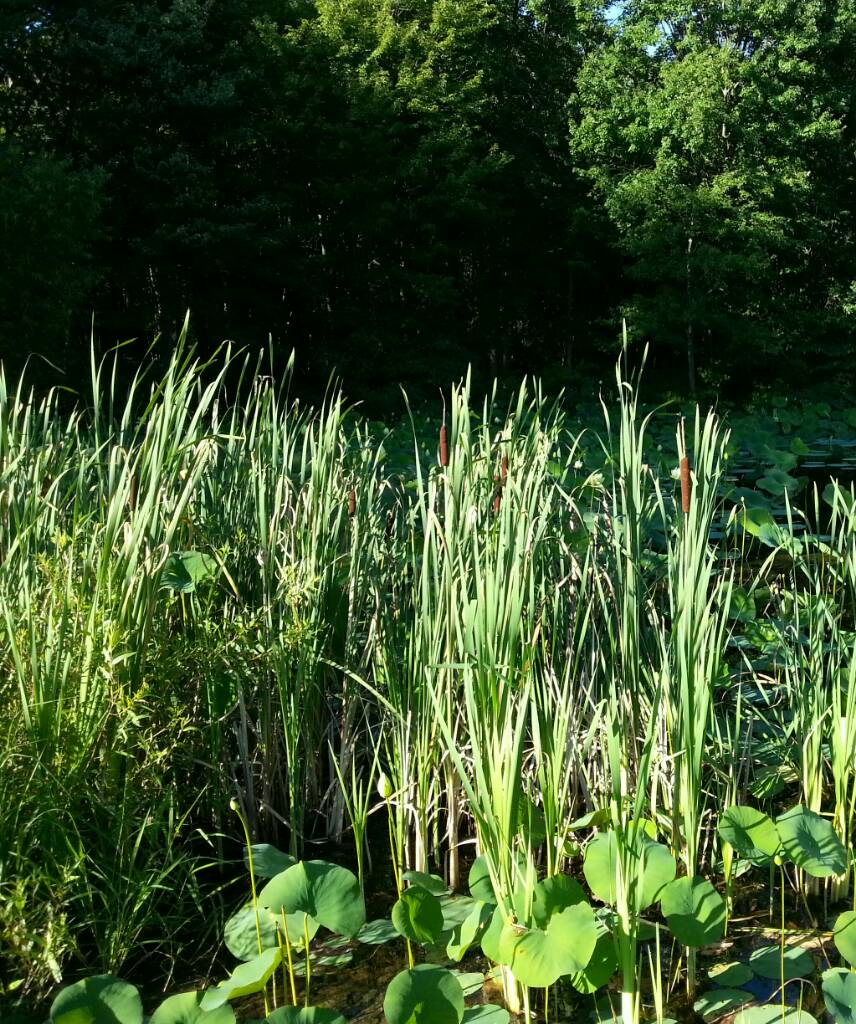
Early on summer mornings, I pull the pool cover aside to create a swim lane. There, between the solar cover and the pool wall, I swim laps, careful to stay on the straight and narrow, avoiding bumps by straying off course. I did this one morning, thinking about my character, when it hit me. She too is in a narrow divide, and if she veers a little to either side, she will be in big trouble. So I wrote a scene, loaded with symbolism, in which she takes an early morning swim in a pond and notes her thin secure path between the tangle of lily pads and towering cattails, between the mucky pond bottom and the open sky, between the fading night and the brightness of day.

Climbing out of the pool yesterday, something dark stuck to my leg. It's a chlorinated pool so it was just one of those 'helicopter' maple seeds, but my initial thought was that it was a leech, fairly common in ponds and lakes. And I thought - ah, more symbolism. A leech can be stuck to her leg when she climbs out of the pond.

So on I go, listening and writing.


Sunday, May 4, 2014

The most frequent questions, Pt. 3

Will there be a sequel to Risking Exposure? What are you writing now?

When I finished writing Risking Exposure, I was tired. I had spent several years reading everything I could get my hands on about the Nazi era, watching documentaries, etc. Pouring through so much twisting of the truth and outright evil was exhausting, physically, emotionally, and spiritually. My conclusion was that I never wanted to read another thing about Nazi Germany ever again.


But within 6 or 8 weeks, something happened. I'd be driving down the road and a character I'd relegated to the 'deleted scenes' folder would pop into my mind. Something a neighbor said would remind me of a dialogue exchange I'd cut. Pretty soon those characters and exchanges were forming new scenes and it became clear - the characters in my deleted scenes folder wanted their story told too. It's my job to give them their opportunity.

What is taking shape is a sequel, although told through another character's POV. No, I don't have a title or a time frame for release. That's actually not even on my radar yet.
I've been researching events which took place in Munich during July 1938 until very early 1939, about 6 months after Risking Exposure ends. I have what I believe to be a framework on which to hang my story. In my over-ambitious mind, I have set a goal of getting a first draft written by the end of 2014. (I may kick myself for making that public.)


Sunday, March 23, 2014

The organized mess


During the process of writing Risking Exposure, I learned two things about my writing style. First, if I outline too much, my characters rebel once I start to write. But if I don't create some structure for the book, it meanders like a ship without a compass.
I don't want to go through either scenario again.

I've started researching, organizing, and writing the sequel to Risking Exposure. For weeks, I've had a basic outline in my head. I've documented many ideas into the voice recorder that's always in my dashboard cubby. (I drive a lot.) I've read books and websites and taken notes. I've plunged ahead and written a couple scenes, one of which may become the opening scene. Now the time has come to create something more concrete.

So I spent yesterday organizing my basic plot points at the dining room table. Crazy, but this is my organized plot. The long paper is a timeline on which I jotted notes about historically significant events in late 1938 that will provide a backdrop to the story. The other piles are research materials on a historical figure and a 'way out' for the climax that will make sense in the story.

I also used a story map, and I sketched out one for my main character yesterday. Today's task is to create a voice journal for her, a longer and more detailed one than I had for the first novel. In coming days/weeks, I plan to sketch out story maps and create voice journals for the other main characters as well. This will (hopefully) help me keep track of who they are, what each wants, and how those personalities and wants conflict and intersect during all three acts of the book.

In the meantime, I have to move all this organization aside so we have a place to eat. 


Sunday, March 16, 2014

Scratching the itch

I've been feeling the itch to write more. But the practical aspects of living - spending time with people I love, working, taking care of my home and my health, participating in community and church activities, etc. - have left me precious little time to write.


Don't get me wrong. I am involved in each and every one of these activities because I enjoy them. They fulfill me in different ways, connect me to the bigger world and allow me to use different gifts and graces. But I find myself frustrated, trying to carve out small bits of time to jot down notes and read some background material. Honestly, it's not enough time to immerse myself in ideas and characters, and I need that to satisfy my muse.


Michael and I talked about it yesterday. I think we came up with a way to create a Writers Retreat of sorts. Not a physical place. More like an escape from other commitments which chip away at my writing time. So we're going to try it next weekend, and my hope is for a good 10+ hours of planning and writing.
I wonder if that much scratching will satisfy my itch. Part of me thinks it will ease the itch for a time. But I bet the overall effect will be like scratching a mosquito bite - I'll just spread the venom through my system and overall, the itching will increase. So be it.


Sunday, March 2, 2014

Connecting through multiple media


I don't know about the proverbial butterfly effect, you know, the one in which a butterfly flaps its wings in Brazil which in turn creates a tornado in Texas. A bit overly dramatic for my taste. But what I do know is that consistent effort eventually brings a result. All I've got to say is - thank God I'm not shy. 


I began the week Monday with an interview on WVIA radio's Art Scene program with the gracious Erika Funke. I'd never been in a broadcasting booth before (okay, maybe on a tour when I was a Girl Scout sometime in the last century. That doesn't count.) After a quick sound check, Erika and I sat opposite one another separated only by over-sized microphones. In a friendly, gentle conversational tone, we began to talk about my book, my research, and my upcoming presentation at the Dietrich. I left there not remembering much of what I said, but knowing it had been a good interview. It's archived here as the February 27th broadcast. Warning: I say "Absolutely" far too often.

Wednesday's Wyoming County Press Examiner featured an article about my upcoming presentation at the Dietrich. In the next couple of days, I received an invitation to present to 7th and 8th grade students at a local school about writing and research. Then by email, I was asked by a middle-school-student who loves to write to participate in a "Career Interview," not about being a physical therapist, but about being a writer.

So, radio and newspaper, scheduling presentations and discussing writing careers. Fascinating.


And great fun.


Monday, August 13, 2012

What I've done right

That list of learn-as-I-go mistakes begs the obvious question: Did I do anything right?

Of course I did. Give myself a virtual pat on the back.

1. I kept my original protagonist, the setting, and her problem. Sophie, Munich, and the fate of the disabled in Nazi Germany are the foundation of my story, and I haven't strayed from that.

2. I researched my setting and her problem before, during, and after my first draft. I've learned more about Nazi Germany than I ever wanted to know, but the best research I did was tactile - I went to Munich with Katie and walked where Sophie would have walked, explored and smelled and tasted until I felt her heartbeat and heard her voice. I went to the Library of Congress and wore white gloves to examine actual era photographs. I opened the crackling yellowed pages of Nazi newspapers and read first-hand reports of the parade at the end of the novel, saw the way it was portrayed to the people, and photographed columns of text to translate at home.

3. I decided to tell the story in Sophie's first-person voice. As soon as I did, she began to speak.

4. I decided the story I'd originally planned was too cumbersome, too complicated, and the fantasy elements felt forced. I ditched the fantasy and multiple story lines in favor of a straight historical fiction story. Honestly, I still like those fantasy elements but they don't belong in this story.

5. I didn’t set a time frame for finishing the book, just a time frame of writing for 10 hours per week.

6. I allowed myself many many rewrites and didn’t hang onto beloved words, scenes, or characters. But I saved the various versions of my story as it evolved, and I plan to use some of my favorite deleted characters and scenes in future stories.

7. I read a lot about writing, attended the Dietrich Theater Writers Group regularly as a reader and critiquer, went to writing SCBWI workshops and conferences, and read well-written books. As I surrounded myself with writers and works that shine, I absorbed.

8. I took in everyone’s advice. But I took to heart only the advice that resonated with me. I'm not writing this book by committee. It's mine and Sophie's.

9. I loved Sophie and committed myself to telling her story, regardless of how many rewrites it took.

10. I kept practicing, kept writing. I didn’t see changes in my writing skill week to week, but gradually, I have improved.

11. I haven’t let setbacks or (many many) rejections get me down for the long term. When I'm frustrated or stuck, I put the work aside for a couple weeks. That freshens my perspective and increases my objectivity. Then I can tackle it again.

Next up, and the last of this series - what I'll do different next time.


Sunday, August 12, 2012

What I learned during my ten thousand hours of practice, Pt. 3


Even though I read how-tos and took a couple courses on how to write a novel, I still floundered. A lot.

More of what I realized once I got going:

11. The novel writing course(s) provided general guidance, but no one held my hand to help me navigate this uncharted territory.


12. Revising a finished novel when my characters needed work was REALLY hard.

13. Writing historical fiction took a lot of research, before and during the writing process. As I revise, the research is ongoing. Good thing I'm still interested in that era.

14. Writing fantasy required me to create an entire world complete with rules of operation. The process was more complex than I thought it would be.

15. Writing multiple story lines which converge took far more planning than writing a single story line with a single protagonist.

16. Writing a single story line with a single protagonist was hard enough.

17. Writing novel-length fiction was nothing like writing articles or like writing non-fiction. And most of the rules my English teachers taught didn’t apply, especially when writing dialogue.

18. I had trouble staying focused on the story. I should have identified, in words out the outset, my story question and my pitch.

19. I didn’t know how to write fiction. My ‘deleted scenes’ and ‘early versions’ files are far bigger than the finished novel. And the novel still needs work.


But I'm learning as I move forward, and believe it or not, I still enjoy the process and the challenge. I've gotten to a point where I can acknowledge what I did right, so that's up for tomorrow.


Friday, August 10, 2012

What I learned during my ten thousand hours of practice, Pt. 1

Malcolm Gladwell famously said that the key to success in any task is logging ten thousand hours of practice. His belief is that perseverance pays off, and I see the logic in that. It jives with the tongue-in-cheek answer to the NY tourist question, "How do I get to Carnegie Hall?" "Practice, practice, practice."

There's an acronym for this concept in the writing world: BIC, butt-in-chair. So as I began to write a novel, I knew I'd need to put in some serious time before I'd have a story worth reading.


I've learned much during these hours in the chair, and over the next few days, I'll share some of the insights I've gained.

As with any new project, I started with a baseline of ideas, assumptions, and skills.
What I thought when I started my novel:

1. I had a good idea for a setting and a problem.

2. I had a couple basic characters and spent a little time thinking about them.

3. That was enough to get me started; I’d work out the details as I went.

4. I wrote an idea for each scene on an index card and stuck them in sequence on a long roll of paper. All I had to do was take down a card, write that scene, and move on to the next.

5. Writing this novel would be like writing the short articles I’d written; it would just take me longer.

6. I’d start at the beginning of the story and write straight through until the ending.

7. I’d write a historical fantasy with multiple story lines and multiple protagonists converging into a climactic whole.

8. I enrolled in a novel-writing course when I started, so that would help me work through the bumps.

9. I knew how to write fiction because I liked to read fiction.

Tomorrow: What I realized once I got going.


Saturday, May 12, 2012

Permission to fail

Newsweek has a great weekly column called "My Favorite Mistake." This one is with Sara Blakely, the woman who invented Spanx (you know, those spandex undergarments designed to keep the jiggles in place.) In it, she describes an embarrassing error during an interview on the BBC - which she apparently handled gracefully. She had been raised to respect the effort she put into an endeavor, not its immediate or ultimate success. As it happened, her mistake opened doors for her, but the reader gets the sense that even if it weren't so, she would have learned from it and moved on.

I was reminded of a quote by Edwin Land, a co-founder of the Polaroid Corporation and inventor of numerous items for the photography industry.
An essential aspect of creativity is not being afraid to fail.
And one of my favorite singer/songwriters, Billy Joel, said,
Take it from me, you learn more from your accidents than anything you could ever learn at school.
Knowing that failure is part of the creative process doesn't make it any more palatable. Failure is just the side dish, which we can hopefully stomach on our way to the main course.


Sunday, April 1, 2012

What a mess I've made

Thank God I'm off work this week. I plan to hole myself up for hours each day, finishing the rewrites on my book.

My original plan for the edits sounded straightforward. Take out this, replace with that. Oh, and strengthen the secondary characters. And get rid of the meandering sub-plot. And while you're at it, remove the extraneous clutter so the readers attention can focus on the real heart of the story - the girl whose disability makes her a target for the Nazis.

The process has not been straightforward. It's been methodical, in that I'm making one large change at a time, then rereading the affected chunks of text. But what's happening slowly and just as methodically is that the story's timeline has been goofed up. So today I looked like a kindergartener with my scissors and tape, literally cutting and pasting bits and pieces of scenes together while continually matching the altered scenes with dates on the vertical timeline I've drawn out and the dates on the 1938 calendar. Quite the unusual writing day, but worth it I hope.

I was able to identify a couple specific scenes I still need to create to connect the great swampy rewrite to the beginning and ending that already work well.

Here's to the pieces fitting together the way I plan.

Tuesday, March 20, 2012

Creative artists

Last weekend, with Addie tucked in a stroller, Katie and I met my sister Judy and her husband George
at the American Quilter's Society show in Lancaster, PA. Unlike me, Judy has a real talent for sewing, and she's been quilting for many years. As her skill grew with practice, her work was recognized in larger and more official venues. That she had two quilts accepted to this international show in Lancaster is an amazing honor.

I'd never been to a quilt show before, and honestly, the only quilts I've ever truly looked at are ones Judy made. So I was amazed by the vendors showing the latest and greatest wares - of course it's an industry Jeanne, there are people in the world who actually enjoy sewing - all the show's different quilt categories, styles, fabrics, techniques, etc. My knowledge on the world of quilting wouldn't fill a thimble. But I know creativity when I see it, and I know how creativity makes me feel - inspired, awestruck, wondering how someone came up with that fantastic idea/design/product. That's how I felt as I wandered through aisles of fabric images, some geometric, some abstract, some artistic and unusual, others traditional and classic.


While Judy and I stood admiring one of her quilts two women chatted nearby, pointing to her quilt and nodding approvingly. When one of them said, "I wonder how she made..." I interrupted them and introduced them to the quilter herself. How wonderful to see that awestruck expression on their faces, much like my own I'm sure. Better yet, I was able to see the ease with which Judy explained her technique, a creative artist in her element.

May we all be so blessed.