Showing posts with label stories. Show all posts

Saturday, July 23, 2016

Focus on right


I've been to the beautiful, friendly city of Munich twice, once for pleasure and once for research. Because Munich is my novel's setting, I have spent many hours there in my head as well. That makes the recent horror there all the more painful. The news coverage gives us terrible details about the event, and in a short time everyone knows the shooter's name, age, and background. Perpetuating the perpetrator. Perpetuating the prejudice. 

And yet I'm sure someone in that mall acted valiantly. No doubt someone sheltered a frightened child, protected a potential victim at risk to his or her own self. Soon, I hope, we'll hear about a 'hero' we can all admire.  


Which reminds me of this seldom-told tale which got little (or no) publicity at the time about terror in another city I love, my hometown of NYC. The video below narrated by Tom Hanks was not made until years later. But stories like this are the ones that deserve the most publicity, the ones I hope we remember. 

On 9/11, the greatest boat rescue in world history plucked half-a-million terrified people off the south end of Manhattan in just 9 hours. Some of the boats were privately owned, others were Coast Guard vessels, ferries, tugs, and tour lines. In the uncertain and frightening events of that day in NYC, these courageous boat owners and captains risked their own lives, driving the flotilla right into the smoke and debris of lower Manhattan. 

I choose to focus on these heroes. I choose to tell stories about those who chose right. 


Sunday, October 5, 2014

Cooking up a good story

I love to cook. Give me a couple hours free on a Saturday, and I'm quite content in my kitchen. I put on some tunes and dance and sing while (I hope) no one is listening. I might try a new recipe or a familiar favorite for dinner, make a pot of soup for my weekday lunches or a loaf of banana bread to share with a friend. In any case, I lose track of time as I chop and saute and mix until my house smells glorious and my appetite is whet.
There's a great deal of pleasure to be had in both the process and the product when I cook - the process is a creative experience for me, multi-sensory and totally enjoyable. And most times, the end product, a scented home and delicious foods made from scratch, is quite satisfying. Even if I do have to do it all over again the next day.

I love to write.Give me a couple hours free on a Sunday, or any day for that matter, and I'm quite content in front of my computer. I sit in the silence of my basement with the company of my own thoughts. After assembling my ingredients, the ideas I've entered in my voice recorder over the last few day, heaps of research materials, my plot notes, and character sketches, I get started. I chop the scene I'm writing apart, verify some historical details, and mix them with the 'what-if' scenarios my recorder and my imagination hand me. I lose track of time and often re-emerge from the depths well after dark, having forgotten to switch out the wash or eat dinner.
The process of writing is a creative experience, one that completely overtakes me. I find myself lost in my fictional world wondering how my protagonist will ever get out of the mess I've made for her. The end product for the day, a few more finished pages, satisfies me. And it leaves me itching to get up the next day and immerse myself again.


Sunday, August 17, 2014

Tell me a story and a Robin Williams moment

Last week, our granddaughters spent a few days with us. Addie who is 'almost four!' and whose language development is off-the-charts is at that wondrous stage of emerging imagination. One of her favorite requests is, "Tell me a story." Stories she knows about characters she loves are easy for re-telling - Nemo, Cinderella, the Three Little Pigs.

One afternoon, we were blowing bubbles outside and Addie stopped in her tracks. "Tell me a story about a magic bubble." She supplied the characters and in less than a minute, I had the rough sketch of a story in my head - beginning, middle, and end, problem and resolution, setting - all of it. Whoa. I told her my story and then dictated it into my voice recorder for safekeeping.

The following day, the same thing happened, this time with a story about 'a tree that's lost in the woods.' Trying to picture how a tree could get lost, I asked about the tree, could it walk and talk, like Tolkien's Ents. She said, "No, silly. Trees don't walk or talk. They're just trees." Ah, well. But again inside a minute, I had a story about a magic tree whose whereabouts had been lost to the ages.

Then I turned it around on her. "Your turn to tell a story," I said. "Who is it about?" I'm proud to say  she was the hero of her own story and she brought along a companion on her imaginary adventure, either her sister or her buddy Cole who lives down the street. I'd supply a detail or two, maybe the setting (a beach) or a problem (they lost their sand toys) and with a few 'and then what happened?' prompts, she'd take it from there. She is a great storyteller-in-the-making.

Ironic that this happened the week we lost one of our generation's great creative minds. When asked about how he came up with imaginative ideas in his classic rapid-fire style, the late Robin Williams once said it came to him as he watched his four-year-old playing with action figures. The child made different voices and personalities for each figure, creating villain-filled problems with hero-filled solutions. One of our generations greatest actors and comics said all he did was try to channel his inner four-year-old.

I'm thankful to have an imaginative four-year-old in my life too. 


Sunday, August 10, 2014

The chatty muse


I've had the great gift of some time off work and have spent several hours each day immersing myself in the historical era of my fictional world. It's gotten so that even during routine events, my muse has been chatty. I listen and take notes.

I recently reread a scene I wrote a few weeks back. In it, my main character confesses her wrongdoing to a priest, and I judged the scene to be good but somewhat predictable. Near the end of the reading, my muse tickled my conscious thought with a question - who is that listening outside the confessional? And I thought Yes! There is someone there! And a more powerful scene (and turn of events for the whole novel) was born.


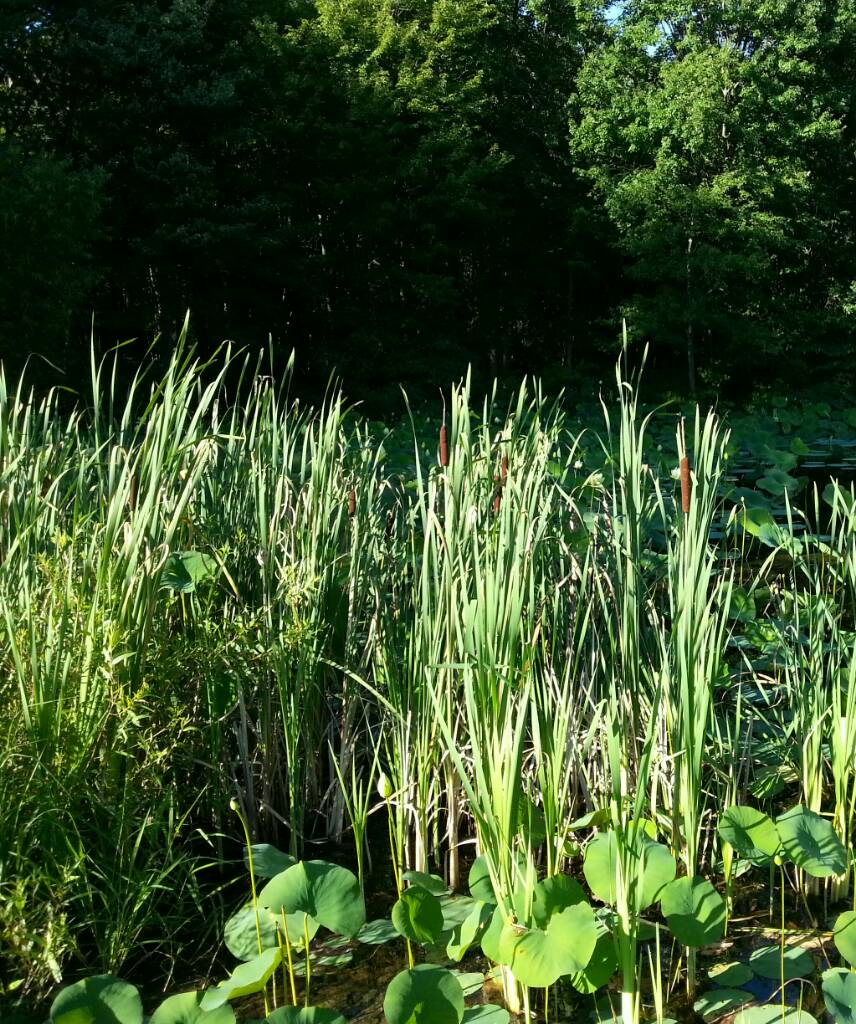
Early on summer mornings, I pull the pool cover aside to create a swim lane. There, between the solar cover and the pool wall, I swim laps, careful to stay on the straight and narrow, avoiding bumps by straying off course. I did this one morning, thinking about my character, when it hit me. She too is in a narrow divide, and if she veers a little to either side, she will be in big trouble. So I wrote a scene, loaded with symbolism, in which she takes an early morning swim in a pond and notes her thin secure path between the tangle of lily pads and towering cattails, between the mucky pond bottom and the open sky, between the fading night and the brightness of day.

Climbing out of the pool yesterday, something dark stuck to my leg. It's a chlorinated pool so it was just one of those 'helicopter' maple seeds, but my initial thought was that it was a leech, fairly common in ponds and lakes. And I thought - ah, more symbolism. A leech can be stuck to her leg when she climbs out of the pond.

So on I go, listening and writing.


Sunday, July 27, 2014

A fan, an interview, and a giveaway!

I had the great honor of being approached by an enthusiastic reader from Australia - dare I say it - a fan! Since Risking Exposure is on her personal list of favorite books of all time, she asked for an interview and for my permission to offer a giveaway on her blog. Of course, I said yes to both :)

So here's her blog, the interview, and the opportunity for you to win one of two free e-books. Have fun!


Sunday, June 1, 2014

So many stories

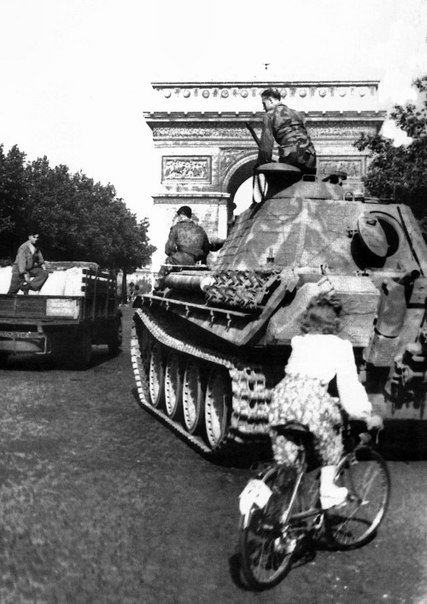
 Yesterday, I had the opportunity to take part in a commemoration of D-Day at the Everhart Museum in Scranton. As reported in the Scranton Times, the museum housed a display of photographs and personal items from late in WWII, focusing of course on France in 1944-45. As is usually the case when touring exhibits from horribly difficult times and places, I found myself looking for street scenes, small clips of the lives of ordinary people. What would it have been like to live there then, to be going to work or raising a family while tanks rolled down the streets of your town?

How did it affect your ability to get to the store, check on elderly family members, or walk the children to school? I find it fascinating to put on someone else's skin so to speak, to learn about an era and think, "What would I do if..."
I guess that explains why I write historical fiction.
Browsing through the D-Day exhibit, one thing struck me over and over - there are so many stories yet to be told, real and fictionalized.

Sunday, May 4, 2014

The most frequent questions, Pt. 3

Will there be a sequel to Risking Exposure? What are you writing now?

When I finished writing Risking Exposure, I was tired. I had spent several years reading everything I could get my hands on about the Nazi era, watching documentaries, etc. Pouring through so much twisting of the truth and outright evil was exhausting, physically, emotionally, and spiritually. My conclusion was that I never wanted to read another thing about Nazi Germany ever again.


But within 6 or 8 weeks, something happened. I'd be driving down the road and a character I'd relegated to the 'deleted scenes' folder would pop into my mind. Something a neighbor said would remind me of a dialogue exchange I'd cut. Pretty soon those characters and exchanges were forming new scenes and it became clear - the characters in my deleted scenes folder wanted their story told too. It's my job to give them their opportunity.

What is taking shape is a sequel, although told through another character's POV. No, I don't have a title or a time frame for release. That's actually not even on my radar yet.
I've been researching events which took place in Munich during July 1938 until very early 1939, about 6 months after Risking Exposure ends. I have what I believe to be a framework on which to hang my story. In my over-ambitious mind, I have set a goal of getting a first draft written by the end of 2014. (I may kick myself for making that public.)


Sunday, April 27, 2014

The most frequent questions, Pt. 2

Why would a nice person like you write about Nazi Germany?

  I've written (and published) fiction and non-fiction short pieces for all ages, preschool through adult. Risking Exposure is the only one set in Nazi Germany. The others aren't even remotely similar in time or place or even in tone - Chicken Soup for the Soul for audiences seeking inspiration, Highlights High Five for preschoolers, Advance for Physical Therapists for PTs and PTAs, Discovery Years and Thriving Family for parents, Hopscotch for kids, plus a few currently on Wattpad. I think across genres, I read across genres, so I write across genres too.

I love stories, real or fictional, in which an unlikely hero must pull himself up by his bootstraps and become more than he was, in which an ordinary person is forced to rise above her circumstances in order to stand up for what is right.
That means the hero would have to be in a time and place in which doing what's right comes at great personal risk. Nazi Germany was just such a place.

All four of my grandparents emigrated to the US from Germany in the 1920s. One grandmother lived in our apartment building when I was a kid, and the other one moved in with us when I was a teen. So we got a good dose of the language, food, music, and culture of the homeland they loved. When I learned of the Nazi years in school, I asked the same questions many have asked - How could that happen? How could the country which produced my own family, plus geniuses like Bach and Goethe allow such horrors to occur right under their noses?

The answers are complex of course, spanning decades of Germany history and the culture of everyday life in a police state and dictatorship. But in exploring the answers, I found some simple themes which resonated with me -
it was a time and place of blind allegiance to an ideal;
in which some people held more value than others;

in which people were brainwashed by a flood of government-controlled information;
in which the voices of those who spoke against the regime were silenced through threats, violence, or detention.

It was and still is a perfect storm to use as a backdrop for a hero story. That's probably why so many of us writers choose to set our stories there.


Sunday, April 20, 2014

The most frequent questions

I've had the good fortune to take part in a number of book signings, and I've presented my historical research in front of more than 100 people now. Audiences have varied in age and size, but I find I'm being asked three questions at almost every event. I'll try to answer them here in installments.

1. Did you always want to be a writer/ write a book?
As a young girl, I did want to write stories. Even then, I was fascinated by the way stories and characters stayed with me, and I wanted to be able to have my ideas impact other people that way. Experiencing a story for me has always been close to experiencing it first-hand - I feel emotions, learn lessons, cheer for heroic actions, and weep over sad endings. Through reading historical fiction and stories set in distant lands, I've come to understand that people through history and around the world are pretty much the same.
So yes, I did want to write when I was a kid. But I also wanted to be a ballerina and to travel the world in a hot air balloon. Turns out I'm a klutz and not fond of heights, so those things didn't happen. And even though I loved creative writing class in high school, I never pursued it in my college or career  plans. I went to college to learn a skill to get a job, not to pursue an interest which would I thought would never earn me a living.

Once my own kids were grown and I had time for personal interests, I found that I still liked to write. In fact, the more I did it, the more I liked it. No, I loved it. Now, a perfect day for me involves some coffee, a good dose of sunshine, and a couple hours of writing.


Next:
Why would a nice person like you write about Nazi Germany?

Sunday, March 23, 2014

The organized mess


During the process of writing Risking Exposure, I learned two things about my writing style. First, if I outline too much, my characters rebel once I start to write. But if I don't create some structure for the book, it meanders like a ship without a compass.
I don't want to go through either scenario again.

I've started researching, organizing, and writing the sequel to Risking Exposure. For weeks, I've had a basic outline in my head. I've documented many ideas into the voice recorder that's always in my dashboard cubby. (I drive a lot.) I've read books and websites and taken notes. I've plunged ahead and written a couple scenes, one of which may become the opening scene. Now the time has come to create something more concrete.

So I spent yesterday organizing my basic plot points at the dining room table. Crazy, but this is my organized plot. The long paper is a timeline on which I jotted notes about historically significant events in late 1938 that will provide a backdrop to the story. The other piles are research materials on a historical figure and a 'way out' for the climax that will make sense in the story.

I also used a story map, and I sketched out one for my main character yesterday. Today's task is to create a voice journal for her, a longer and more detailed one than I had for the first novel. In coming days/weeks, I plan to sketch out story maps and create voice journals for the other main characters as well. This will (hopefully) help me keep track of who they are, what each wants, and how those personalities and wants conflict and intersect during all three acts of the book.

In the meantime, I have to move all this organization aside so we have a place to eat. 


Sunday, January 26, 2014

Connections - the thrill and the side effect


I checked Facebook one morning and found that Michael Rausch, my book cover designer, had shared this photo to my page. It seems that SCBWI hosted a book give-away for middle-school students in Los Angeles - and the boy in the top left of the photo is smiling and holding Risking Exposure! What a thrill for me to see these excited young readers, even though I doubt I'll ever connect with them in person.


But I have enjoyed connecting with readers in my geographic area in person. An interesting side-effect of all that presenting and speaking with people is that my own interest in pre-war Nazi Germany has stayed alive. I have again chosen a time frame, August 1938 - Spring 1939, and have again begun some research. I need clear information about several key events in Munich during that time - the Munich Conference/Accord, Kristallnacht, and the Kindertransport to begin with. Once again, I'm starting at the local library. Then I'll send my curiosity out to the greater world, gathering in pieces and fragments and weaving them into a backdrop for another story. Hopefully that one will excite readers as well.

Tuesday, August 13, 2013

Quotes, pt 2 - why I read

More quotes from my collection, this batch about the value of stories.

A great book should leave you with many experiences, and slightly exhausted at the end. You live several lives while reading. – William Styron
Through a well-told story, I can live vicariously in another era, in another culture, or in an alternate universe. I can inhabit the experiences of a hero or villain, of a frail old man, an anxious teen-age girl, or a struggling single parent. These experiences have increased my empathy toward people whose lives are different from my own.

After nourishment, shelter, and companionship, stories are the thing we need most in this world. – Philip Pullman
Maybe that's why, throughout human history, stories were told wherever people gathered. Your Thanksgiving table has hosted a tale or two, I'm sure.


In the case of good books, the point is not to see how many of them you can get through, but how many can get through to you. -Mortimer J. Adler
Here's what's gotten through to me in hundreds of books - a story would be boring if there were no struggle, no risk-taking, no effort needed to reach success. Who wants to read about someone who has it easy all the time?
I've learned that the same holds true with life. It's the problems we face and the fact that we overcome them that gives us hope and forces us to grow and eventually succeed.


So here's the last word on the subject.
Let us read and let us dance; these two amusements will never do any harm to the world.
-Voltaire